From Chew to Bloodstream: What Really Happens in Your Body After You Eat a CBD Gummy
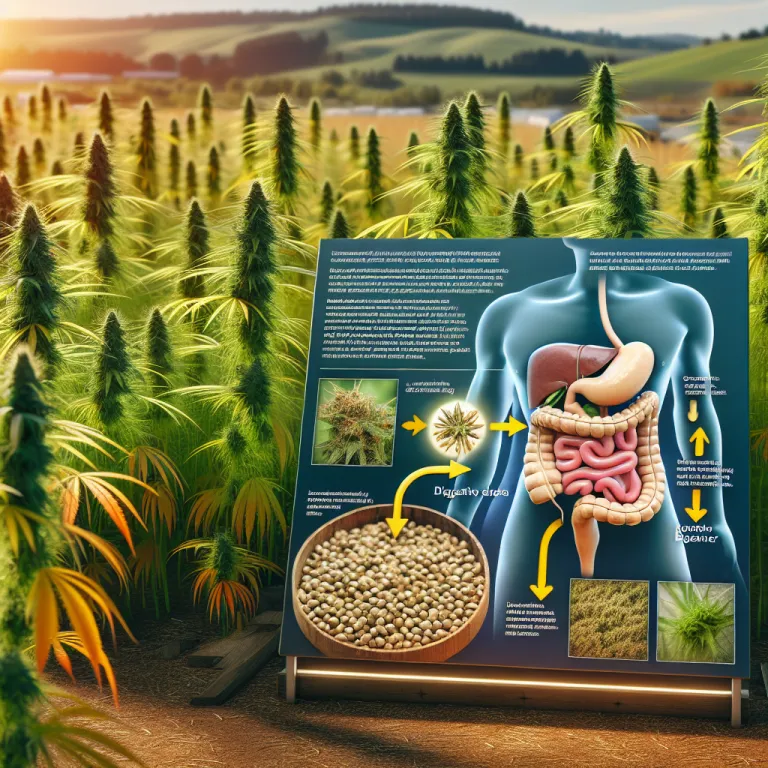
Photo: human digestive system illustration with natural supplements and hemp plant, via hempfood.com
You pop a gummy, chew it, swallow, and move on with your day. Simple enough, right? But underneath that casual moment, your body is launching a surprisingly complex operation — one that takes anywhere from 30 minutes to two hours to fully unfold and involves your stomach, your liver, your gut microbiome, and a whole lot of biochemistry.
If you've ever wondered why your gummies seem to kick in faster some days than others, or whether you're actually absorbing all that CBD you're paying for, this article is for you.
Step One: The Mouth and Stomach
The journey starts the moment you start chewing. Unlike sublingual CBD oils — which absorb partially through the mucous membranes under your tongue — gummies go straight through your digestive tract. There's no shortcut.
Once swallowed, the gummy travels to your stomach, where it begins to break down. The gelatin or pectin base dissolves, releasing the CBD and any other active ingredients into the stomach environment. This process can take anywhere from 20 minutes to over an hour depending on several factors, which we'll get to shortly.
The Liver's Big Role: First-Pass Metabolism
Here's where things get interesting — and where a lot of the CBD you consume actually disappears.
After your stomach processes the gummy, the contents move into your small intestine, where CBD and other cannabinoids are absorbed into the portal blood supply and sent directly to the liver. The liver then metabolizes the CBD before it ever reaches general circulation. This process is called first-pass metabolism, and it's why edible forms of CBD (and many medications, for that matter) have lower bioavailability than delivery methods that bypass the digestive system.
In practical terms, bioavailability refers to the percentage of a substance that actually makes it into your bloodstream and has an active effect. For CBD gummies and other oral edibles, research suggests bioavailability typically falls somewhere between 13% and 19%, though some studies have reported ranges both below and above that window depending on formulation and individual factors.
That might sound discouraging, but it's not the whole story.
What Affects How Much CBD You Actually Absorb?
Bioavailability from gummies isn't fixed — it shifts based on a number of variables that you can actually influence:
Food intake Taking CBD gummies with a meal — especially one that contains healthy fats — can significantly boost absorption. CBD is fat-soluble, meaning it dissolves in lipids rather than water. When there's dietary fat present in your digestive system at the same time, more CBD gets absorbed through the intestinal wall. Avocado, nuts, olive oil, eggs — any of these alongside your gummy can make a meaningful difference.
Your gut microbiome This is an emerging area of research that's getting a lot of attention. Your gut is home to trillions of microorganisms that play a direct role in how you process and absorb compounds from food and supplements. A healthy, diverse microbiome appears to support more efficient cannabinoid metabolism. Conversely, gut dysbiosis — an imbalance in gut bacteria — may interfere with absorption and even alter how CBD interacts with your endocannabinoid system.
Metabolism and body composition Individual metabolic rate, body weight, and fat percentage all influence how CBD is stored and released in the body. Because CBD accumulates in fatty tissue, people with higher body fat percentages may find that effects build gradually over time as tissues become saturated.
Product formulation Not all gummies are formulated equally. Some brands use nanoemulsion technology or water-soluble CBD to improve absorption rates, potentially pushing bioavailability higher than traditional oil-based formulations. Always worth checking what's on the label.
The Timing Question
One of the most common questions CBD gummy users have is: why does it take so long to feel anything?
Because of first-pass metabolism and the time it takes for digestion to move CBD into circulation, most people don't notice effects from a gummy for 45 minutes to 2 hours after taking it. This is a significant difference from vaping (effects in minutes) or sublingual oils (15 to 45 minutes).
The trade-off? Effects from gummies tend to last longer — often 4 to 6 hours or more — because the slow-release nature of digestion means CBD continues entering your bloodstream gradually rather than all at once.
This sustained release profile makes gummies particularly appealing for people managing conditions that benefit from consistent, day-long support rather than a quick spike of effect.
CBD and Digestive Wellness: A Two-Way Relationship
Here's something worth knowing: your gut doesn't just process CBD — CBD may actually influence your gut.
The endocannabinoid system, which CBD interacts with, has receptors throughout the gastrointestinal tract. CB1 and CB2 receptors are present in the gut lining, the enteric nervous system (sometimes called the "second brain"), and in immune cells that line the intestines. Early research suggests that cannabinoids may play a role in regulating gut motility, intestinal inflammation, and even the permeability of the gut lining.
While it would be premature to make specific health claims, the scientific community is actively investigating CBD's relationship with conditions like IBS, inflammatory bowel issues, and gut-brain axis communication. It's a genuinely exciting frontier.
What About Sensitive Stomachs?
If you have digestive sensitivities, you might be wondering whether gummies are the right format for you. The honest answer is: it depends.
For most people with mild digestive sensitivity, gummies are well-tolerated. The key is to start with a lower dose, take them with food, and pay attention to how your body responds. Some individuals find that gummies with added ingredients — certain artificial sweeteners like sorbitol, for instance — can cause digestive discomfort, so opting for cleaner formulations matters.
If you have a diagnosed gastrointestinal condition or compromised gut lining, it may be worth talking to a healthcare provider before starting any new supplement, CBD or otherwise.
Making Your Gummies Work Harder for You
Now that you understand the journey, here are a few practical takeaways to optimize your experience:
- Take gummies with a fat-containing meal or snack to boost absorption
- Be patient — give the gummy 90 minutes before deciding it's not working
- Stay consistent — daily use allows CBD to build to effective levels in your system over time
- Support your gut health with a balanced diet and probiotics, which may improve cannabinoid processing
- Choose quality formulations from brands that provide third-party lab testing and transparent ingredient lists
Your gummy may look simple sitting there in its little bottle. But it's working with some of the most sophisticated systems in your body. Treat it — and your gut — accordingly.